AdsPower vs Multilogin: Which Is Better in 2026?
AdsPower vs Multilogin compared: AdsPower wins on price and automation, Multilogin on stealth pedigree. Full breakdown of features, pricing, and which to choose.
If you manage multiple online accounts — for e-commerce, affiliate marketing, ad verification, or agency work — an antidetect browser is the tool that keeps those accounts from being linked and banned. Two names dominate that conversation: AdsPower and Multilogin.
The stakes are real. The antidetect browser market has grown rapidly as platforms tighten detection, and a single fingerprint slip can link accounts worth thousands in ad spend or inventory. Choosing between a budget-friendly powerhouse and an enterprise-grade stealth veteran is a decision that shapes your entire multi-accounting operation.
So which one should you actually use? This in-depth comparison breaks down AdsPower vs Multilogin on fingerprinting strength, pricing, scale, automation, and team features — so you can pick the right antidetect browser for your workflow and budget in 2026.


AdsPower vs Multilogin: The Verdict Up Front
AdsPower wins on price and automation, offering a free plan, some of the lowest entry pricing in the market, and powerful built-in automation for high-volume operators. It's the pragmatic choice for most users and teams scaling many profiles on a budget.
Multilogin wins on stealth pedigree and enterprise trust. As one of the oldest players, its Mimic and Stealthfox browser engines have a long track record against the toughest detection systems, making it the safer pick for high-stakes accounts where a ban is catastrophic.
In short: choose AdsPower for value and scale, Multilogin for maximum stealth assurance and enterprise polish. The rest of this guide unpacks exactly why.

Feature Comparison at a Glance
Here's how the two browsers stack up on the specifications that matter most for multi-accounting.
| Feature | AdsPower | Multilogin |
|---|---|---|
| Starting price | $5.4/mo | €29/mo |
| Free plan | Yes | No |
| Browser profiles | Up to 10,000+ | Up to unlimited |
| Browser engines | SunBrowser (Chromium) + FlowerBrowser (Firefox) | Mimic (Chromium) + Stealthfox (Firefox) |
| Operating systems | Windows, macOS, Linux | Windows, macOS, Linux |
| Automation / API | Built-in RPA + API | API + automation |
| Team collaboration | Yes | Yes |
| Best for | Value, scale, automation | Enterprise stealth, high-stakes accounts |
AdsPower Overview
AdsPower has surged in popularity as the most cost-effective antidetect browser, pairing genuinely low pricing with a surprisingly deep feature set. It offers a free tier, entry plans starting around $5.4/mo, and the ability to run thousands of isolated browser profiles.
Its standout strength is automation: a built-in RPA (robotic process automation) tool lets you script repetitive tasks visually, without code, alongside a full API for developers. Combined with strong profile management and team features, AdsPower is built for operators who need to do a lot, cheaply, at scale.
It supports both a Chromium-based engine and a Firefox-based one, so you can diversify the browser signatures across your profiles rather than having every identity look like the same browser. Frequent updates keep its fingerprinting current with the latest Chrome and Firefox releases, which matters because outdated browser versions are themselves a detection signal. For a tool at this price, the breadth of capability is genuinely unusual.
Multilogin Overview
Multilogin is the original enterprise antidetect browser, trusted by professionals for years and widely regarded as a benchmark for fingerprint spoofing. Its Mimic (Chromium) and Stealthfox (Firefox) engines are mature and battle-tested against aggressive detection.
That pedigree comes at a premium — pricing starts at €29/mo with no free plan — but for agencies and operators managing high-value accounts, the reliability is the point. Multilogin positions itself as the safe, professional choice where account security outweighs cost.
Its longevity is part of the value: years of refinement against evolving detection mean fewer surprises on the platforms that matter most. For operators whose entire business depends on a handful of irreplaceable accounts, that proven consistency is often worth more than any feature checklist.
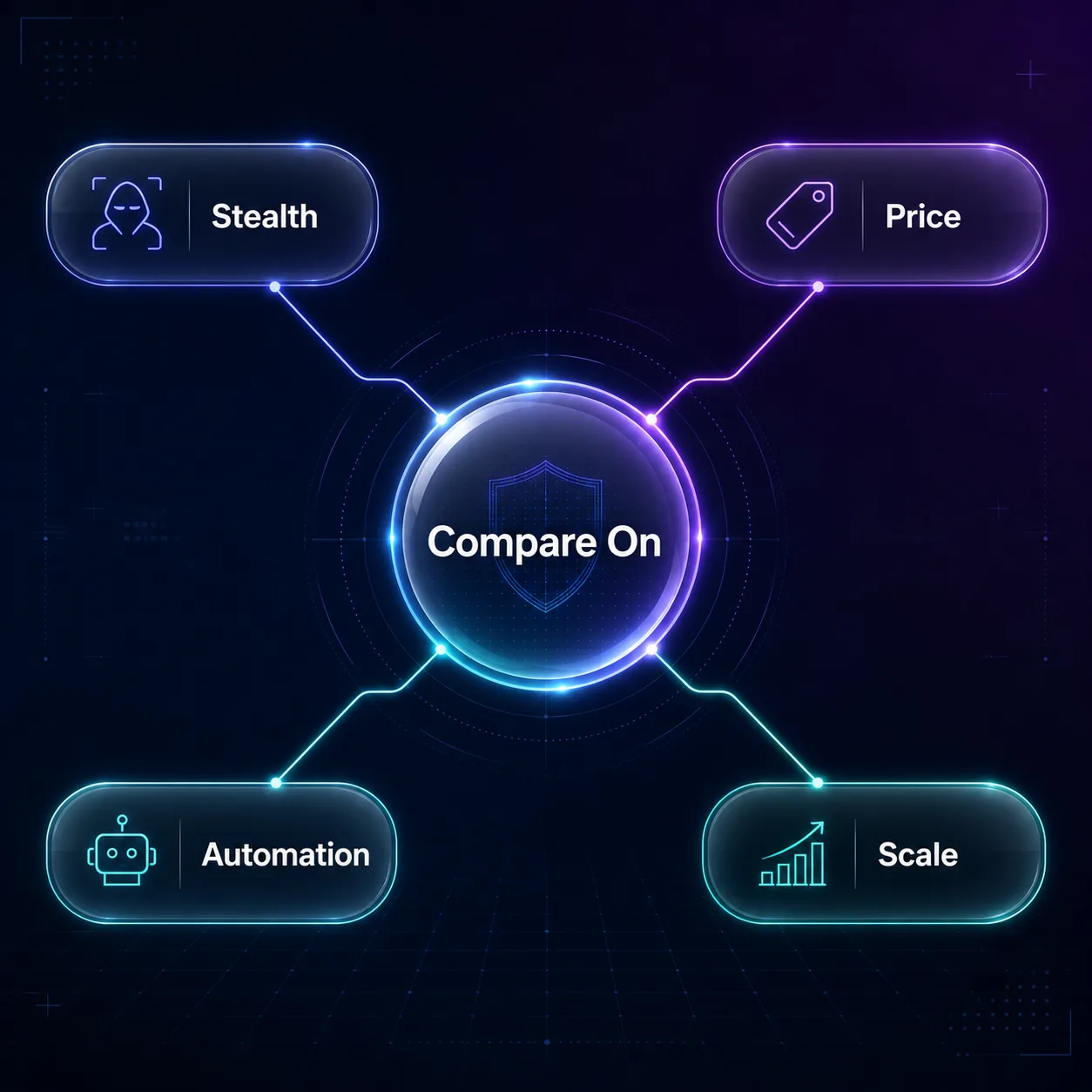
Head-to-Head: AdsPower vs Multilogin
Broad positioning aside, here's how the two compare on the dimensions that decide real-world multi-accounting success.
1Fingerprinting and Stealth
Both browsers spoof canvas, WebGL, fonts, and the full suite of signals used in browser fingerprinting. Multilogin's engines have the longer track record and are often considered the gold standard for stealth. AdsPower's fingerprinting is genuinely strong and competitive, but Multilogin retains a slight edge in reputation for the hardest targets.
2Pricing and Value
This is AdsPower's clearest win. A free plan plus entry pricing around $5.4/mo massively undercuts Multilogin's €29/mo floor and no free tier. For anyone cost-sensitive or testing the waters, AdsPower delivers far more profiles per dollar.
3Scale and Profile Management
Both scale to large operations — AdsPower advertises up to 10,000+ profiles and Multilogin up to unlimited. In practice both handle serious multi-accounting comfortably, though AdsPower's lower per-profile cost makes massive scale cheaper to reach.
4Automation and API
AdsPower pulls ahead here with its built-in, no-code RPA automation, which lets non-developers script tasks visually. Both offer robust APIs, but AdsPower's bundled automation tooling gives high-volume operators more out of the box.
5Team Collaboration and Support
Both support team roles, permissions, and profile sharing, making them viable for agencies. Multilogin's enterprise focus shows in its polished onboarding and support tiers, while AdsPower offers responsive support at a lower price point.
Pricing Compared
Cost is often the deciding factor, so here's a clearer view of what each browser charges to get started.
| Plan Aspect | AdsPower | Multilogin |
|---|---|---|
| Free plan | Yes (limited profiles) | No |
| Entry price | ~$5.4/mo | ~€29/mo |
| Pricing model | By profiles + features | By profiles + tier |
| Best value for | Budget & high-volume users | Enterprise & agencies |
Real-World Use Cases: When Each Browser Shines
Specs only matter in context, so it helps to see where each browser tends to win in practice. Both handle the core multi-accounting job, but their strengths pull them toward different users.
AdsPower is the default for high-volume, cost-sensitive operations. Dropshippers running dozens of store and ad accounts, affiliate marketers spinning up many identities, and freelancers managing client social profiles all benefit from its low per-profile cost and free plan. Its built-in RPA automation is a genuine differentiator for anyone doing repetitive work — bulk account warm-up, scheduled posting, or data collection — without hiring a developer. If your operation is defined by volume and tight margins, AdsPower usually wins.
Multilogin tends to win where the downside of a ban is severe. Agencies managing established, high-spend advertising accounts for clients, e-commerce operators with aged and valuable storefronts, and professionals in competitive intelligence lean on its long stealth track record. When a single linked account could cost thousands or a client relationship, the premium buys peace of mind. It is less about raw scale and more about protecting accounts that are expensive or impossible to replace.
Many mature operations actually run both: AdsPower for the long tail of lower-risk, high-volume profiles, and Multilogin for a smaller set of crown-jewel accounts. There is no rule that says you must standardize on one, and splitting by risk level is a sensible, common strategy.
Ease of Use and Onboarding Compared
A powerful browser you cannot configure quickly is a liability, so day-to-day usability matters as much as raw capability. Here the two take slightly different approaches.
AdsPower is generally praised for a clean, approachable interface that gets new users creating profiles fast. Its dashboard surfaces bulk actions, profile grouping, and the automation builder prominently, which suits operators who live in the tool all day. The learning curve for basic multi-accounting is gentle, and the free plan means you can learn the workflow before paying. The trade-off is that its rapid feature expansion occasionally makes the interface feel dense.
Multilogin leans into a more polished, enterprise-style onboarding experience, with documentation and support tiers aimed at teams standing up a serious operation. Its interface is stable and considered, reflecting years of refinement, though the absence of a free plan means your first real evaluation happens on a paid or trial basis. For agencies that value structured onboarding and responsive higher-tier support, that polish is part of what the premium pays for.
For most individual users, AdsPower's combination of a free plan and an intuitive dashboard makes it the faster tool to get productive in. For teams that want guided setup and enterprise support from day one, Multilogin's onboarding is the more reassuring experience. Either way, budget an afternoon to configure your fingerprints and proxies correctly before you scale — the initial setup discipline matters more than which browser you picked.
Which Antidetect Browser Should You Choose?
The right pick depends entirely on your priorities and budget. Here's a quick framework.
1Choose AdsPower If You Want Value and Automation
If you're cost-conscious, running many profiles, or want built-in no-code automation, AdsPower is the obvious choice. Its free plan and low pricing make it ideal for freelancers, dropshippers, affiliate marketers, and anyone scaling volume without an enterprise budget.
2Choose Multilogin If Stealth and Reliability Come First
If you manage high-value accounts where a ban would be catastrophic — established e-commerce stores, large ad accounts, agency client work — Multilogin's battle-tested stealth and enterprise support justify the premium. When the cost of failure is high, its track record is reassuring.
3Consider Your Proxy Setup Either Way
Neither browser hides your IP — that's the proxy's job. Whichever you choose, pair it with quality residential or mobile proxies. Our guide to the best proxies for outreach automation and the antidetect browser directory can help you complete the stack.
Common Mistakes When Choosing an Antidetect Browser
Picking the right browser is only half the battle — these avoidable mistakes undermine either tool.
1Choosing on Price Alone
AdsPower's low cost is compelling, but if you manage irreplaceable high-value accounts, the cheapest option isn't always the smartest. Weigh the cost of a potential ban against the monthly savings. Sometimes Multilogin's premium is cheap insurance; sometimes AdsPower's value is exactly right.
2Ignoring the Proxy Layer
An antidetect browser spoofs your device fingerprint, but a shared or datacenter IP will still link your accounts. Many operators buy a premium browser and then undermine it with cheap proxies. The browser and the proxy must both be strong — read how platforms detect multiple accounts to see why.
3Reusing Fingerprints Across Profiles
Creating profiles that share the same fingerprint parameters defeats the purpose. Let the browser generate genuinely distinct, consistent fingerprints for each identity, and never copy one profile's configuration onto another.
4Skipping the Free Trial or Plan
AdsPower's free plan lets you test fingerprint quality and workflow before paying, and Multilogin offers trials. Not testing on your actual target platforms before committing is a common and avoidable error — what works on one site may behave differently on another.
5Neglecting Team Permissions
For agencies, handing every team member full access is a security risk. Both browsers offer role-based permissions; use them to limit who can export or edit profiles, protecting your accounts from accidental or malicious mistakes.
Best Practices for Multi-Account Safety
- One profile, one identity, one proxy — never share fingerprints or IPs across accounts you want kept separate.
- Match proxy geography to the profile — align each profile's IP location with its stated location for consistency.
- Test before scaling — validate fingerprint quality on your real target platforms using a free plan or trial first.
- Learn how detection works — understanding canvas and WebGL fingerprinting helps you configure profiles correctly.
- Compare your options — see how these two stack up against rivals in our guide to choosing an anti-detect browser.
Frequently Asked Questions
Conclusion: AdsPower for Value, Multilogin for Assurance
The AdsPower vs Multilogin decision ultimately comes down to a single trade-off: cost and automation versus stealth pedigree and enterprise trust. Both are excellent antidetect browsers with strong fingerprinting, cross-platform support, and team features — there is no wrong answer, only the right fit.
For most users, AdsPower is the pragmatic winner: a free plan, low pricing, massive profile capacity, and built-in automation make it the best value in the market. For high-stakes operators who want the most proven stealth and enterprise polish, Multilogin earns its premium.
Ready to decide? Compare both side by side in our comparison tool, explore alternatives in the antidetect browser directory, and read our companion breakdown of Multilogin vs GoLogin to round out your research.
Keep Reading
More articles you might enjoy