Best Proxies for Sneaker Bots in 2026
The best proxies for sneaker bots, ranked by checkout speed, IP quality, and success rate on defended drops — with the honest trade-offs of each.
Limited sneaker drops sell out in seconds, and few retailers fight bots harder. Nike SNKRS, Shopify, and Footsites ban repeated or flagged IPs on sight, so the proxy behind your bot often decides whether you check out or hit the dreaded error page.
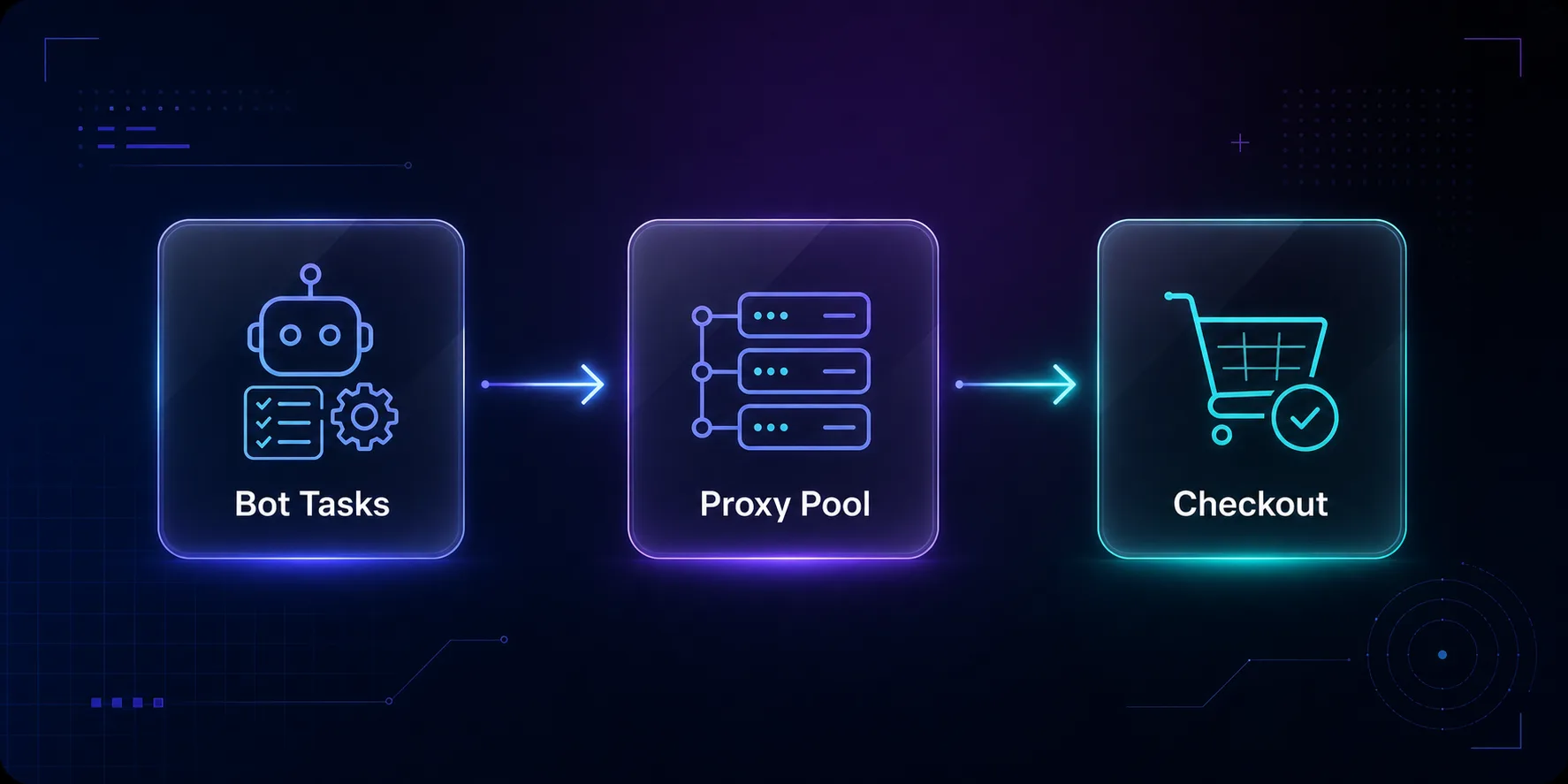
The right proxy gives every task a fresh, low-latency IP that looks like a real local shopper. In this guide we rank the best proxies for sneaker bots in 2026 based on checkout speed, IP quality, and success rate on defended sites — with the honest trade-offs of each.
What Makes a Good Sneaker Proxy
Not every proxy survives a hyped release. Three things matter most:
- Speed: checkout is a race — low latency to the retailer wins.
- IP type: ISP (static residential) proxies pair datacenter speed with residential trust; rotating residential proxies add scale.
- Pool freshness: a large, clean pool means fewer bans and one clean IP per task.
The Best Sneaker Proxies in 2026
1IPRoyal

IPRoyal is the community favorite for copping on a budget. Its Royal Residential and static ISP IPs are non-expiring, so unused traffic never goes to waste between drops, and setup is beginner-friendly. Best for coppers who want reliable residential and ISP options without an enterprise price tag.
The 32M+ pool is smaller than the enterprise giants, but quality is high and pricing is transparent. Use its ISP proxies for your fastest tasks and residential for account generation. See how it stacks up in our IPRoyal vs Oxylabs comparison.
2Decodo

Decodo (formerly Smartproxy) pairs a fast static ISP proxy option with a huge 115M+ residential pool, so you can put low-latency ISP IPs on the checkout task and clean rotating residential behind your entries. Its polished dashboard makes spinning up a fresh IP per task quick, even under drop-day pressure.
It sits in the mid-to-premium tier and is one of the easier networks to run, with a 99.99% uptime record and site-ready IP quality that holds up on defended Shopify and Footsite releases.
3Oxylabs

Oxylabs brings enterprise-grade infrastructure: a 102M+ IP pool, 99.99% uptime, and excellent global coverage. For coppers running many tasks across regions, its scale and stability mean fewer failed entries on the biggest drops.
It is priced for serious operations rather than casual users, and the dashboard is deep. If you want a network that will not buckle when traffic spikes, Oxylabs delivers.
4SOAX

SOAX offers one of the largest pools here (191M+) with strong filtering for clean, geo-accurate IPs. Flexible targeting down to city level helps when a release is region-locked, and easy rotation makes it simple to generate volume.
It sits in the mid-to-premium tier. Reach for SOAX when you need a big, clean rotating pool for entries plus precise geo-targeting for regional drops.
5NodeMaven

NodeMaven's filter-first approach and the longest sticky sessions on the market make it excellent for the account-generation side of copping, where you need one stable IP through sign-up and warm-up.
Its 30M+ residential and mobile pool is smaller, but IP quality is a genuine strength. Best paired with a faster ISP provider for the actual checkout.
Sneaker Proxies Compared
| Provider | Best For | Proxy Type | Pool |
|---|---|---|---|
| IPRoyal | Value / all-round | ISP + Residential | 32M+ |
| Decodo | Fast ISP + easy setup | ISP + Residential | 115M+ |
| Oxylabs | Scale & stability | Residential + ISP | 102M+ |
| SOAX | Clean rotating pool | Residential + Mobile | 191M+ |
| NodeMaven | Account generation | Residential + Mobile | 30M+ |
ISP vs Residential for Sneakers
Our take: ISP (static residential) proxies usually win the checkout because they are fast and static while still looking residential. Rotating residential proxies win for volume — generating many raffle entries or accounts. Most serious coppers run both: ISP for the checkout task, residential for scale. Datacenter proxies are cheap and fast but flagged on strict sites, so keep them for low-defense stores only. Dig deeper in our guides to the types of proxies and the best ISP proxy providers.
Common Mistakes to Avoid
- Reusing one IP across tasks — retailers ban repeated hits instantly; use one clean IP per task.
- Ignoring latency — a slow residential IP loses the checkout race; ping-test before a drop.
- Buying too small a pool — hyped releases can need hundreds of fresh IPs.
- Using datacenter IPs on strict sites — they are flagged on Shopify and Nike on sight.
Frequently Asked Questions
Conclusion
The best sneaker proxy depends on your setup: IPRoyal for value, Decodo for fast, easy ISP checkout, Oxylabs for scale, SOAX for a big clean pool, and NodeMaven for account generation. Whatever you pick, provision one clean IP per task, test latency before release day, and match the IP type to the site. Ready to gear up? Compare all proxy providers and lock in your setup before the next drop.
Keep Reading
More articles you might enjoy