Best Rotating Proxies of 2026 (Cheapest yet Premium)
The best rotating proxies of 2026, ranked on cost per successful request, so you get premium-grade rotation at cheap prices, with the traps to avoid.
![Best Rotating Proxies of [year] (Cheapest yet Premium)](/_next/image?url=https%3A%2F%2Fproxyhorizon.com%2Fcdn%2Fblog-images%2Fbest-rotating-proxies-featured-1-ms6ya1yz.webp&w=3840&q=75)
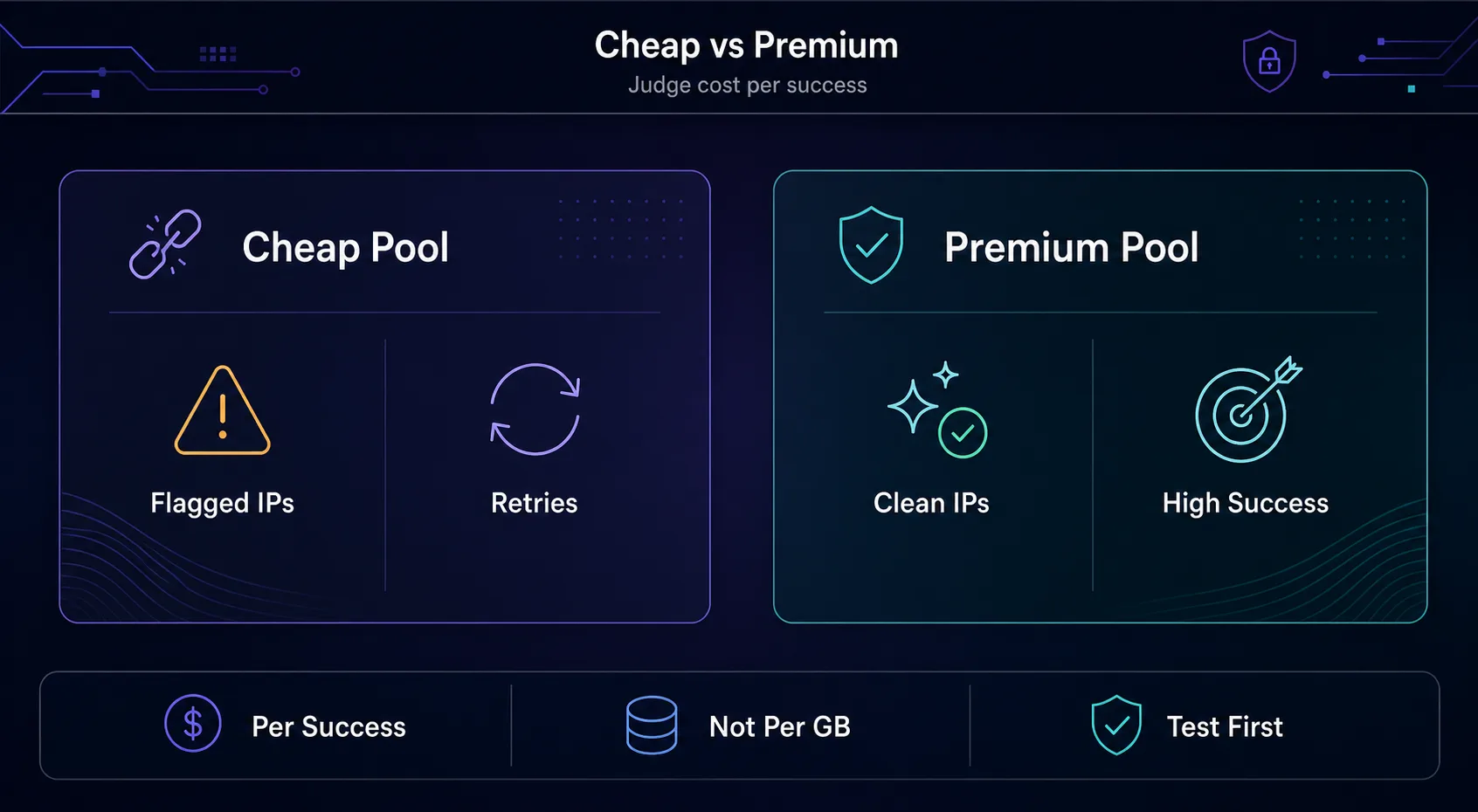
Rotating proxies are where price and quality collide hardest. The premium networks rotate through millions of clean IPs and rarely get blocked, but they can bill you into next quarter. The cheap ones give you a big pool number on the pricing page and a wall of CAPTCHAs in production. What you actually want is the overlap: providers that rotate reliably and won't drain your budget.
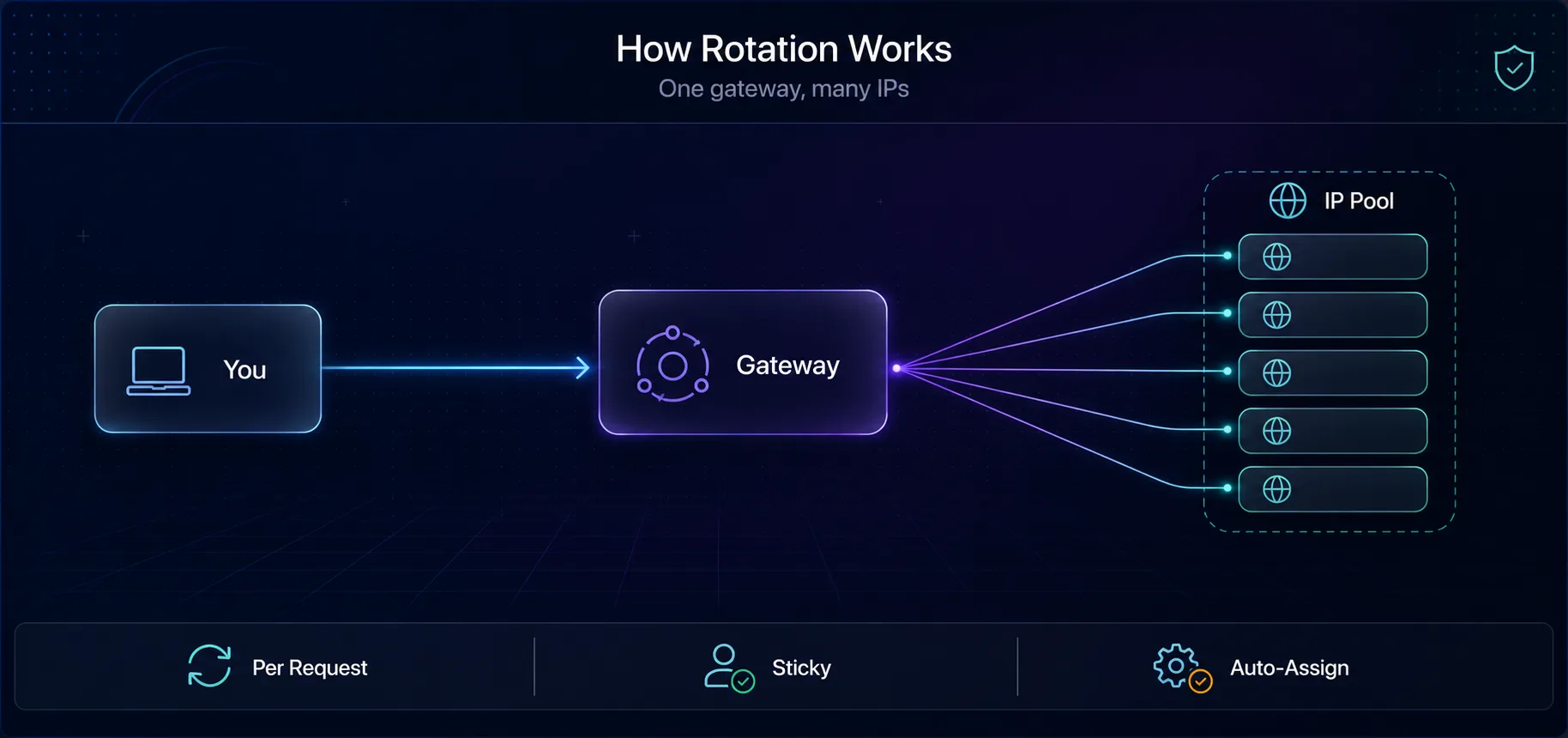
That overlap exists, and it's wider than most roundups admit. This guide ranks the best rotating proxies of 2026 on the metric that matters, cost per successful request, so you get premium-grade rotation at prices that make sense. If you're still fuzzy on how rotation works, our rotating proxies explainer covers the mechanics first.
Every pick below rotates IPs automatically from a single gateway. The difference is pool quality, features, and what you pay for a request that actually lands.
What Makes a Rotating Proxy Worth Paying For?
The pricing page number is the least useful metric. Here's what we actually weigh.
- Success rate on real targets, because a cheap pool that fails half your requests costs more than a pricier one that works.
- Clean, ethically sourced IPs so rotation doesn't just cycle you through pre-flagged addresses.
- Rotation control: per-request rotation for scraping, sticky sessions for logins, both from one endpoint.
- Fair, flexible pricing, ideally pay-as-you-go or non-expiring options, not just enterprise contracts.
- Reliability and support so a long job finishes instead of stalling halfway.
New to the fundamentals? See what a residential proxy is and how proxies work for the groundwork.
The Best Rotating Proxies in 2026
How we picked: we ranked on cost per successful request, pool cleanliness and sourcing, rotation control, and value, favoring providers that deliver premium rotation without premium-only pricing. Some links are affiliate links and we may earn a commission, which never changes our rankings.
1Decodo

Best overall value. Decodo (formerly Smartproxy) is the cheapest-yet-premium sweet spot in one product. It pairs a large, clean 115M+ residential pool across 195 countries with a rotating gateway that just works, plus sticky sessions and an easy dashboard, all at pricing that does not punish smaller projects. Rotation is a one-line change, geo-targeting sits in the username string, and success rates hold up on strict targets. For most people wanting premium rotation without the premium bill, it is the first pick.
2IPRoyal

Best pay-as-you-go value. IPRoyal's non-expiring residential traffic is ideal for rotating work that comes in bursts, since your bandwidth balance does not vanish monthly. It rotates cleanly across 195 countries with SOCKS5 support and ethically sourced IPs, at some of the friendliest entry pricing for genuine residential rotation. The pool is smaller than the giants, so very high-concurrency jobs may see more retries, but for value it is hard to beat.
3SOAX

Best pool quality. SOAX rotates through one of the largest continuously vetted pools on this list, 191M+ residential and mobile IPs, with granular country, city, and ISP targeting. Its filtered, whitelisted approach means rotation cycles you through clean addresses, not flagged ones, which keeps success rates high on tough targets. It sits in the mid-to-premium band, so it is the pick when quality per request matters more than the lowest sticker price.
4Oxylabs

Best for scale. Oxylabs is the premium heavyweight, with a 102M+ residential pool, an advanced rotation engine, enterprise SLAs, and a managed scraper option. For large rotating jobs that cannot afford to stall, this is infrastructure that will not blink. It is priced for serious use, but committed volume brings the unit cost down, and the reliability pays for itself at scale. Overkill for a hobby project, ideal for a production pipeline.
5Webshare

Cheapest entry point. Webshare offers a genuinely usable free tier and some of the lowest paid prices for rotating proxies, with native SOCKS5. It is the easiest way to test rotation and prototype before spending much. The trade-off is a smaller pool across fewer countries and a more datacenter-leaning network, so it suits lighter rotation and learning rather than heavy, strict-target work.
6PyProxy

Best big pool on a budget. PyProxy rotates through a large 90M+ residential network with SOCKS5 support and flexible low pricing, including an unlimited-bandwidth daily option that heavy rotators love. It gives you scale and rotation without premium cost. It is less established than the top names, so start with a small plan and test the IP quality before scaling a big job.
7Geonode

Best flat, unlimited pricing. Geonode's standout is its unlimited-bandwidth residential option, which removes the per-gigabyte anxiety that makes heavy rotation expensive. For rotating jobs that burn a lot of traffic, predictable flat pricing is a genuine advantage. The pool is smaller than the leaders, so weigh coverage against the cost savings for your workload. Browse the full field in our proxy directory.
Rotating Proxy Types Compared
Rotation is a behaviour, not a type. You can rotate any IP source, and the source decides trust and cost.
| Rotating Type | Success Rate | Speed | Cost | Best For |
|---|---|---|---|---|
| Residential | High | Medium | $$ | Strict sites, geo-research |
| Mobile | Highest | Medium | $$$ | The hardest targets |
| Datacenter | Low-Medium | Fastest | $ | High-volume lenient sites |
Our take: rotate residential IPs for strict targets, and cheaper datacenter for lenient, high-volume work. See the full landscape in our guide to the types of proxies.
Rotating Proxy Pricing Compared
Residential rotation is usually billed per gigabyte; a few offer non-expiring or flat models that suit bursty budgets. Approximate positioning (always verify current pricing):
| Provider | Pricing Model | Sticky Sessions | Best Fit |
|---|---|---|---|
| Decodo | Per GB, plans | Yes | Best overall value |
| IPRoyal | Non-expiring per GB | Yes | Pay-as-you-go |
| SOAX | Per GB, flexible | Yes | Pool quality |
| Oxylabs | Per GB, enterprise | Yes | Scale, reliability |
| Webshare | Free + cheap paid | Yes | Cheapest entry |
| PyProxy | Per GB + unlimited day | Yes | Big pool, budget |
| Geonode | Unlimited bandwidth option | Yes | Heavy, flat pricing |
Check before you buy: normalize on cost per successful request, not the headline per-GB rate. A cheap pool that fails is the most expensive option there is. Compare budget picks in our cheapest private proxies guide.
How to Choose a Rotating Proxy
1What Are You Rotating For?
Large-scale scraping wants per-request rotation and a big clean pool. Account or checkout flows want sticky sessions on the same gateway. Name the job and the choice narrows fast.
2How Strict Are Your Targets?
Heavily protected sites need residential or mobile rotation. Lenient or open-access targets tolerate cheaper datacenter rotation. Match the IP source to the wall you're hitting.
3How Much Traffic Will You Burn?
Bursty or occasional work suits non-expiring (IPRoyal) or free tiers (Webshare). Heavy, steady rotation is cheaper on a flat or unlimited plan (Geonode). Estimate your gigabytes first.
4Cheapest or Most Reliable?
For value, Decodo and IPRoyal lead. For scale and uptime, Oxylabs and SOAX. Most people land on the value picks; scale up only when volume justifies it.
Common Rotating Proxy Mistakes
1Buying on Pool Size Alone
A headline of "100M+ IPs" means nothing if they're recycled and flagged. Judge by success rate on your target, not the pool number on the pricing page.
2Rotating on Logged-In Sessions
Per-request rotation breaks anything you're logged into, because the IP jumps mid-session. Use sticky sessions for accounts and checkouts, rotation for public scraping.
3Ignoring Cost Per Success
The cheapest per-GB rate is a trap if the IPs fail. A slightly pricier pool at 95% success beats a bargain pool at 60% every time. Normalize on working requests.
4Skipping the Free Trial
Every provider here offers a free tier or trial. Benchmark against your real targets across a few hundred requests before committing to an annual plan.
Frequently Asked Questions
The Bottom Line
Cheap and premium aren't opposites in rotating proxies, they overlap in a handful of providers who rotate clean pools at fair prices. Decodo is the best overall value, IPRoyal the pay-as-you-go pick, and Webshare the cheapest way in. SOAX and Oxylabs bring premium pool quality and scale, while PyProxy and Geonode give you big pools and flat pricing on a budget.
Whichever you choose, judge it on cost per successful request, not the headline rate, use sticky sessions for logins and per-request rotation for scraping, and test on your real targets first. Do that and you get premium rotation without the premium bill.
Ready to pick? Compare live specs in our proxy directory, line two up with our comparison tool, or learn the mechanics in our rotating proxies guide.
![Grok Bot vs OpenClaw vs Hermes vs n8n ([year])](/_next/image?url=https%3A%2F%2Fproxyhorizon.com%2Fcdn%2Fblog-images%2Fgrok-bot-vs-openclaw-vs-hermes-vs-n8n-1-mtzmbk5w.webp&w=3840&q=75)
![Grok Bot vs Claude Cowork vs ChatGPT Work ([year])](/_next/image?url=https%3A%2F%2Fproxyhorizon.com%2Fcdn%2Fblog-images%2Fgrok-bot-vs-claude-cowork-vs-chatgpt-work-1-mtzmbgoq.webp&w=3840&q=75)
