Best Cheapest Private Proxies of 2026
The cheapest private proxies of 2026, compared for genuinely dedicated IPs, pool quality, and value, so you get private proxies that are cheap where it counts.
![Best Cheapest Private Proxies of [year]](/_next/image?url=https%3A%2F%2Fproxyhorizon.com%2Fcdn%2Fblog-images%2Fcheapest-private-proxies-featured-1-ms6m35ps.webp&w=3840&q=75)
"Private proxy" gets thrown around loosely, so let's be precise: a private proxy is one you don't share with strangers. It's a dedicated IP (or a private pool) assigned to you alone, which means no one else's activity gets your address flagged. The catch is that private usually costs more than shared, so the goal here is finding the cheapest options that are still genuinely private.
They exist. A handful of providers sell dedicated and private-pool proxies at prices that won't sting, whether you need a fixed datacenter IP for a few dollars a month or private residential traffic without an enterprise contract. This guide ranks the cheapest private proxies of 2026, with the honest trade-offs on price versus quality.
First, a quick word on what "cheap" should and shouldn't mean, then the picks.
What Is a Private Proxy?
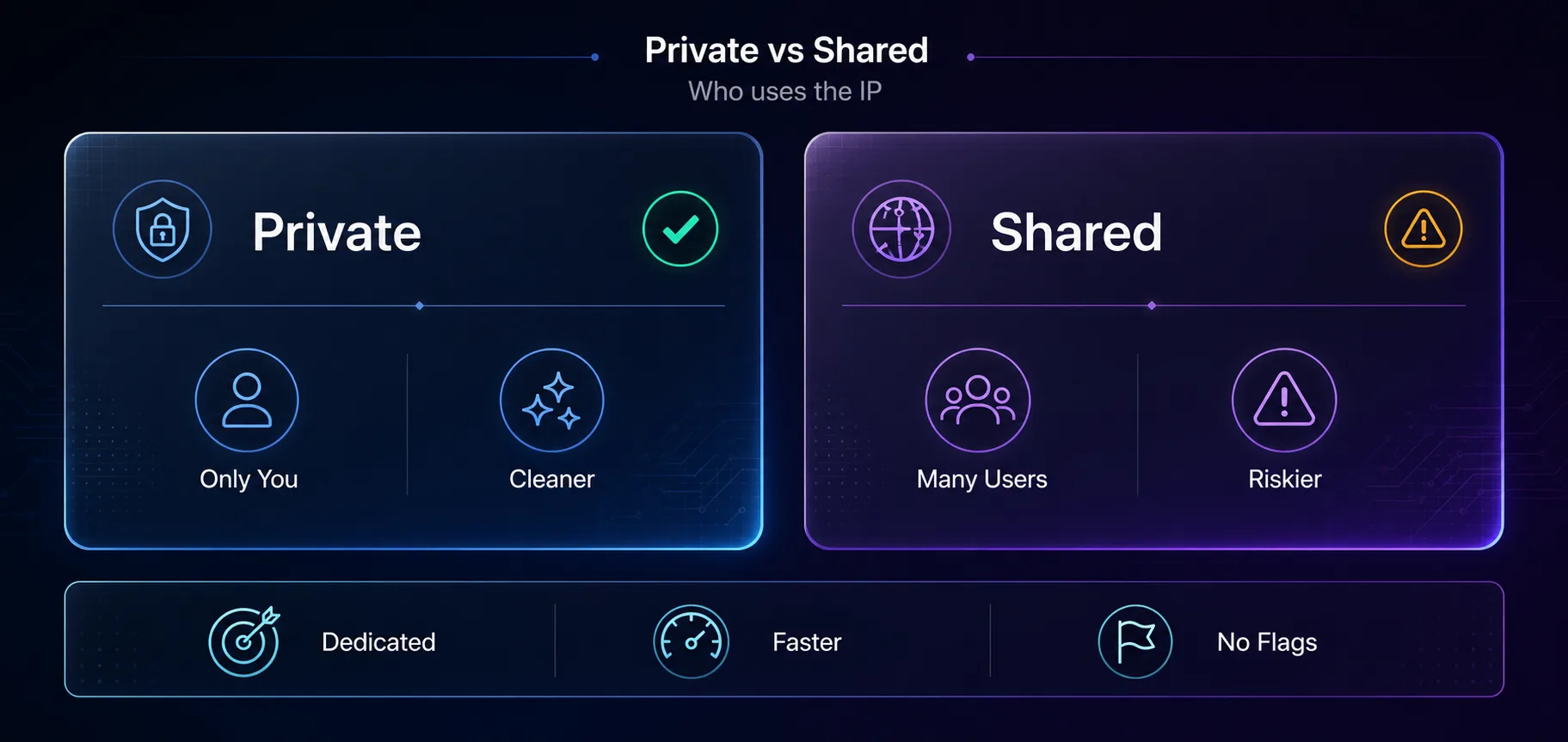
A private proxy is dedicated to a single user, unlike a shared proxy where many people route through the same IP. Because you're the only one using it, a private proxy is faster and far less likely to be flagged from someone else's abuse. The term covers dedicated datacenter IPs, static ISP proxies, and private residential allocations.
| Type | Who uses the IP | Cost |
|---|---|---|
| Private / Dedicated | Only you | Higher, but cheap options exist |
| Shared | Many users at once | Cheapest, but riskier |
| Rotating pool | You, from a large pool | Per GB, varies |
If you're new to the categories, our guide to the types of proxies and datacenter proxies covers the ground.
What "Cheap" Should Mean
Cheap should mean low price for clean, working IPs, not low price because the IPs are recycled and pre-flagged. A dedicated IP that fails half your requests costs more in wasted effort than a slightly pricier one that works. So we rank on value: price weighed against pool quality, reliability, and whether the IPs are genuinely private.
The Cheapest Private Proxies in 2026
How we picked: we weighed price per IP or per gigabyte, whether the proxies are genuinely private or dedicated, pool cleanliness, and reliability, prioritizing the best value rather than the lowest sticker price. Some links are affiliate links and we may earn a commission, which never changes our rankings.
1Webshare

Cheapest dedicated proxies. Webshare is the go-to for low-cost private proxies, offering dedicated datacenter IPs at some of the lowest per-IP prices anywhere, plus a free tier to test first. You get private IPs, SOCKS5 support, and a clean dashboard without a big spend. The trade-off is that its network is smaller and more datacenter-focused, so it suits budget dedicated use rather than heavy residential privacy.
2IPRoyal

Best value private residential. IPRoyal offers dedicated and private options across datacenter, ISP, and residential, with non-expiring traffic that stretches your budget on occasional use. Its ethically sourced pool and friendly pricing make it the best all-round value when you want private IPs that are also trustworthy. A smaller residential pool than the giants, but excellent bang for the buck.
3PyProxy

Cheapest large pool with SOCKS5. PyProxy sells private residential and SOCKS5 proxies with low, flexible pricing, including per-IP options and an unlimited-bandwidth daily plan that heavy users love. It gives you scale and private access without premium cost. It is less established than the top names, so start with a small plan and test the IP quality before scaling.
4Geonode

Best flat, unlimited pricing. Geonode's unlimited-bandwidth option removes the per-gigabyte worry that makes private residential expensive, giving you predictable flat costs. For steady, budget-conscious private use, that pricing model is a real advantage. The pool is smaller than the leaders, so weigh coverage against the savings for your specific needs.
5Decodo

Best value with reliability. Decodo (formerly Smartproxy) is not the absolute cheapest, but it delivers dedicated and private options from a large, clean pool with an easy dashboard and dependable uptime. When you want private proxies that reliably work without an enterprise price tag, it is the sensible middle ground. Great geo-coverage and beginner-friendly plans round it out.
6SOAX

Cleanest private pool. SOAX costs a bit more, but its continuously vetted residential and mobile pool with granular targeting means you rarely waste money on flagged IPs. For private use where clean, working addresses matter more than the lowest price, it is worth the step up. Think of it as paying slightly more to waste far less.
7NodeMaven

Best for private, stable sessions. NodeMaven's filter-first sourcing and long sticky sessions give you a clean, private IP that stays put, which is ideal for account work or anything needing a consistent identity. It is newer and smaller than the giants, but its quality-first focus means the IPs you get are dependable. Browse the full field in our proxy directory.
Cheapest Private Proxy Pricing Compared
Dedicated IPs are often billed per IP per month; private residential is usually per gigabyte, with a few flat options. Approximate positioning (always verify current pricing):
| Provider | Private Option | Billing | Best Fit |
|---|---|---|---|
| Webshare | Dedicated datacenter | Per IP, cheap + free tier | Cheapest dedicated IPs |
| IPRoyal | Datacenter, ISP, residential | Non-expiring per GB | Best value residential |
| PyProxy | Residential, SOCKS5 | Per IP + unlimited day | Cheap large pool |
| Geonode | Residential | Unlimited bandwidth option | Flat pricing |
| Decodo | Dedicated + residential | Per GB, plans | Value + reliability |
| SOAX | Residential, mobile | Per GB, flexible | Cleanest pool |
| NodeMaven | Residential, mobile | Per GB, sticky | Stable private sessions |
Check before you buy: a cheap dedicated IP that is already flagged is no bargain. Judge by clean, successful requests, not the headline price. Compare more budget options in our cheapest proxies for scraping guide.
How to Choose a Cheap Private Proxy
1Dedicated IP or Private Pool?
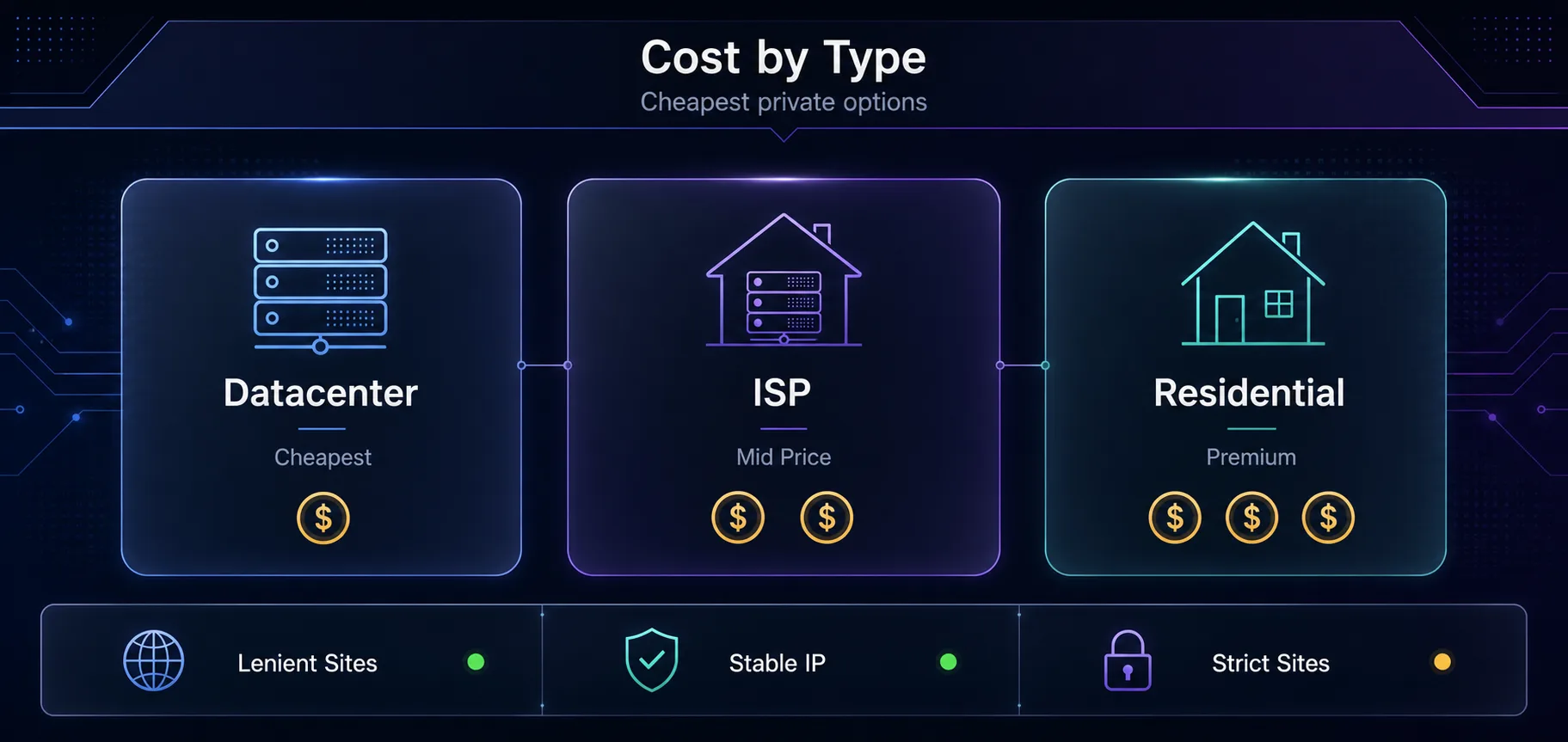
A dedicated datacenter or ISP IP is cheapest for a fixed, long-lived address. A private residential pool costs more but blends in as a real user. Pick based on whether you need one steady IP or many trusted ones.
2Datacenter or Residential?
Dedicated datacenter is the cheapest genuinely private option and fine for lenient targets. Private residential costs more but is far harder to detect. Match the type to how strict your targets are.
3How Much Will You Use?
For a fixed IP, per-IP monthly pricing is predictable. For heavy residential traffic, a flat or unlimited-bandwidth plan avoids a spiraling per-GB bill. Estimate your usage first.
4Is the Provider Transparent?
Cheap is only good if the IPs are clean and ethically sourced. Favor providers open about their pool and sourcing over an unknown seller with a suspiciously low price.
Common Mistakes Buying Cheap Private Proxies
1Assuming Cheap Means Private
Some "cheap private" offers are actually shared pools relabeled. Confirm the IP is genuinely dedicated to you before buying, or you inherit other users' flags.
2Buying Flagged Datacenter IPs
The cheapest dedicated IPs are sometimes recycled from abused ranges. Test on your target before committing to a long plan.
3Overpaying for Residential You Don't Need
If your target is lenient, a cheap dedicated datacenter IP does the job for a fraction of residential cost. Don't pay the residential premium unless the target demands it.
4Ignoring Reliability for Price
A slightly pricier proxy that works beats a cheaper one that fails constantly. Factor in wasted time and retries, not just the monthly fee.
Frequently Asked Questions
The Bottom Line
Cheap and private aren't a contradiction, you just have to know what you're buying. Webshare is the cheapest for dedicated IPs, IPRoyal the best value for private residential, and PyProxy and Geonode give you scale and flat pricing on a budget. Decodo, SOAX, and NodeMaven cost a little more but deliver cleaner, more reliable private pools.
Whatever you choose, remember that the real price is per working IP, not per sticker. Confirm the proxy is genuinely dedicated, test it on your target before committing, and match datacenter or residential to how strict that target is. Do that and you get private proxies that are cheap in the way that counts.
Ready to buy? Compare live specs in our proxy directory, put two head-to-head with our comparison tool, or see the privacy angle in our best proxies for privacy guide.


![Best Apify Actors for Scraping Social Media in [year]](/_next/image?url=https%3A%2F%2Fproxyhorizon.com%2Fcdn%2Fblog-images%2Fbest-apify-actors-social-media-1-mtsb9eli.webp&w=3840&q=75)