Best Proxies for Privacy in 2026 (Reliable & Cheap)
The best proxies for privacy in 2026 that are reliable and cheap, compared on ethical sourcing, clean pools, and fair pricing, plus the traps to avoid.
![Best Proxies for Privacy in [year] (Reliable & Cheap)](/_next/image?url=https%3A%2F%2Fproxyhorizon.com%2Fcdn%2Fblog-images%2Fbest-proxies-for-privacy-featured-1-ms6m33q1.webp&w=3840&q=75)
Privacy proxies live in an awkward middle ground. The premium networks are genuinely private but expensive, and the bargain-bin ones are cheap because they log, recycle, or resell your traffic. What most people actually want is the honest middle: clean, reliable IPs that hide your real address without costing a fortune.
That balance is real, and it comes from a handful of providers who source ethically, keep their pools clean, and still price fairly. This guide ranks the best proxies for privacy in 2026 that are both reliable and cheap, with the honest trade-offs so you know exactly what you're paying for.
One thing to be clear about first: a proxy hides your IP from the sites you visit, but which provider you trust matters more than the fact you use one. Let's find the ones worth trusting.
What Makes a Proxy Good for Privacy?
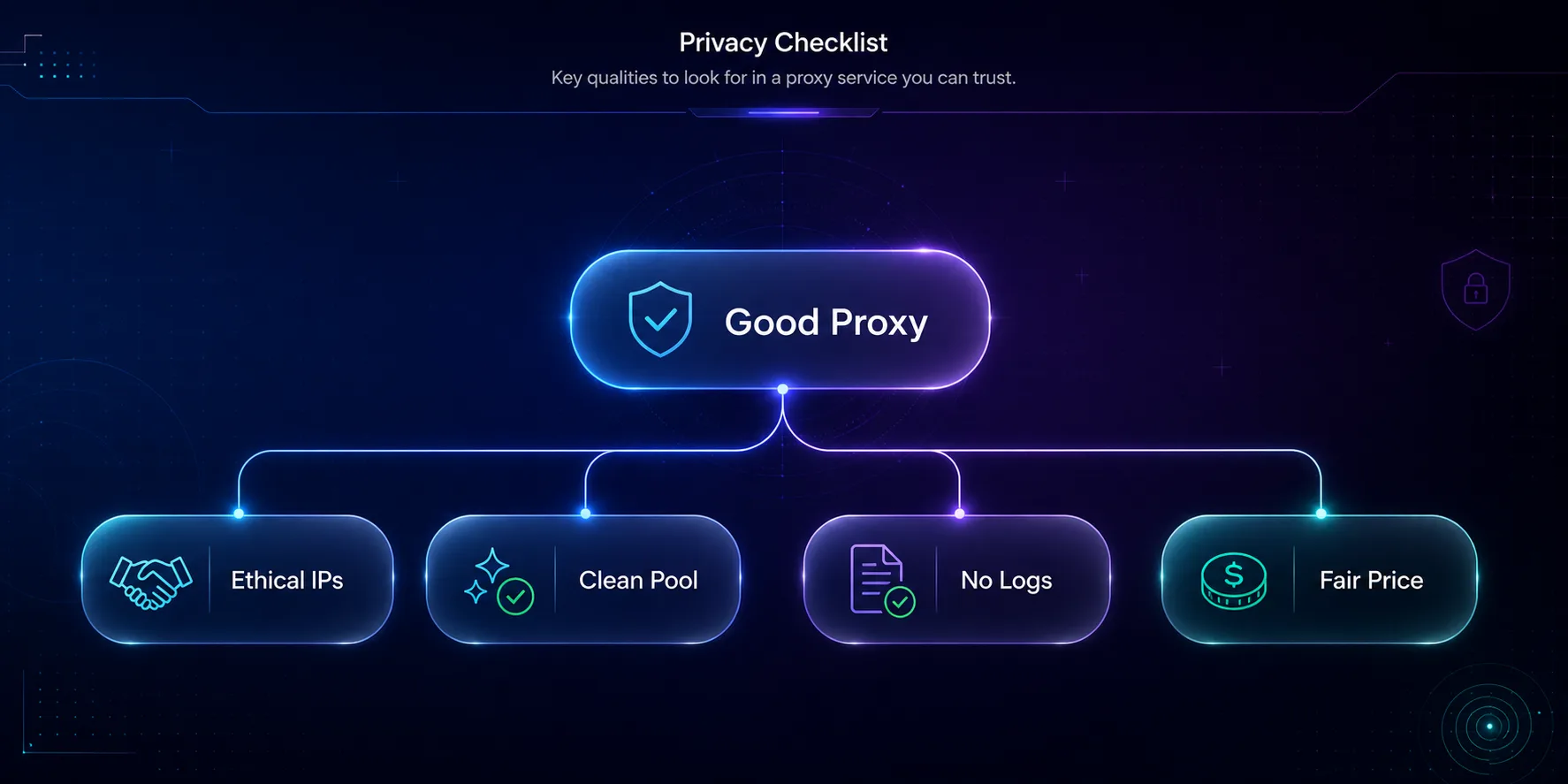
Price is easy to compare. The privacy signals that actually matter are harder, so here's what we weigh.
- Ethically sourced IPs from consent-based networks, not shady means. This is the line between a real privacy tool and a data-harvesting one.
- Clean, non-flagged pools so your requests blend in instead of hitting blocks that expose you to retries.
- No-logging and transparency about what the provider stores and how it operates.
- Reliability so your connection stays private and stable, not dropping you onto your real IP.
- Fair pricing that does not force you into an enterprise contract for basic privacy.
New to the basics? Our explainer on what a residential proxy is and how a proxy server works set the foundation.
The Best Privacy Proxies in 2026
How we picked: we weighed IP sourcing and pool cleanliness, reliability, transparency, and value, prioritizing providers that deliver real privacy without premium-only pricing. Some links are affiliate links and we may earn a commission, which never changes our rankings.
1IPRoyal

Best value for privacy. IPRoyal hits the reliable-and-cheap sweet spot better than almost anyone. Its residential IPs are ethically sourced through a consent-based network, and its non-expiring traffic means you buy a bandwidth balance that does not vanish monthly, ideal for occasional private browsing. Coverage spans 195 countries with SOCKS5 support. The pool is smaller than the giants, but for everyday privacy on a budget it is hard to beat.
2Decodo

Best all-round reliability. Decodo (formerly Smartproxy) pairs a large, clean residential pool with an easy dashboard and consistent uptime, making it the dependable pick when you want privacy that just works. With 115M+ IPs across 195 countries and both rotating and sticky sessions, it covers most privacy needs at approachable pricing. Not the absolute cheapest, but the reliability earns its keep.
3Webshare

Cheapest entry point. Webshare offers a genuinely usable free tier and some of the lowest paid prices around, with native SOCKS5. For light privacy needs or testing the waters, it lowers the barrier to almost nothing. The trade-off is a smaller pool across fewer countries, so it suits lighter use rather than heavy, wide-geo privacy work.
4SOAX

Cleanest pool. SOAX runs one of the largest continuously vetted residential and mobile pools on this list, with granular country, city, and ISP targeting. Its filtered, whitelisted approach keeps quality high, which is exactly what you want for reliable privacy. It sits in the mid-to-premium band, so it is the pick when clean IPs matter more than rock-bottom cost.
5PyProxy
Best big pool on a budget. PyProxy offers a large residential network with SOCKS5 support and flexible, low pricing, including an unlimited-bandwidth daily option that heavy users appreciate. It gives you scale without premium cost. The honest caveat is that it is less established than the top names, so start small and test before committing.
6Geonode

Best for unlimited bandwidth. Geonode's standout is its unlimited-bandwidth residential option, which removes the per-gigabyte anxiety that comes with metered plans. For privacy tasks that involve a lot of traffic, predictable flat pricing is a genuine advantage. The pool is smaller than the leaders, so weigh coverage against the cost savings for your use case.
7NodeMaven

Best for clean, stable sessions. NodeMaven's filter-first approach screens out low-quality IPs before they reach you, and its long sticky sessions keep a stable, private identity for as long as you need. That focus on clean, consistent connections suits privacy well. It is newer and smaller than the giants, but the quality-first design is a real strength. Browse the full field in our proxy directory.
Residential vs Datacenter for Privacy
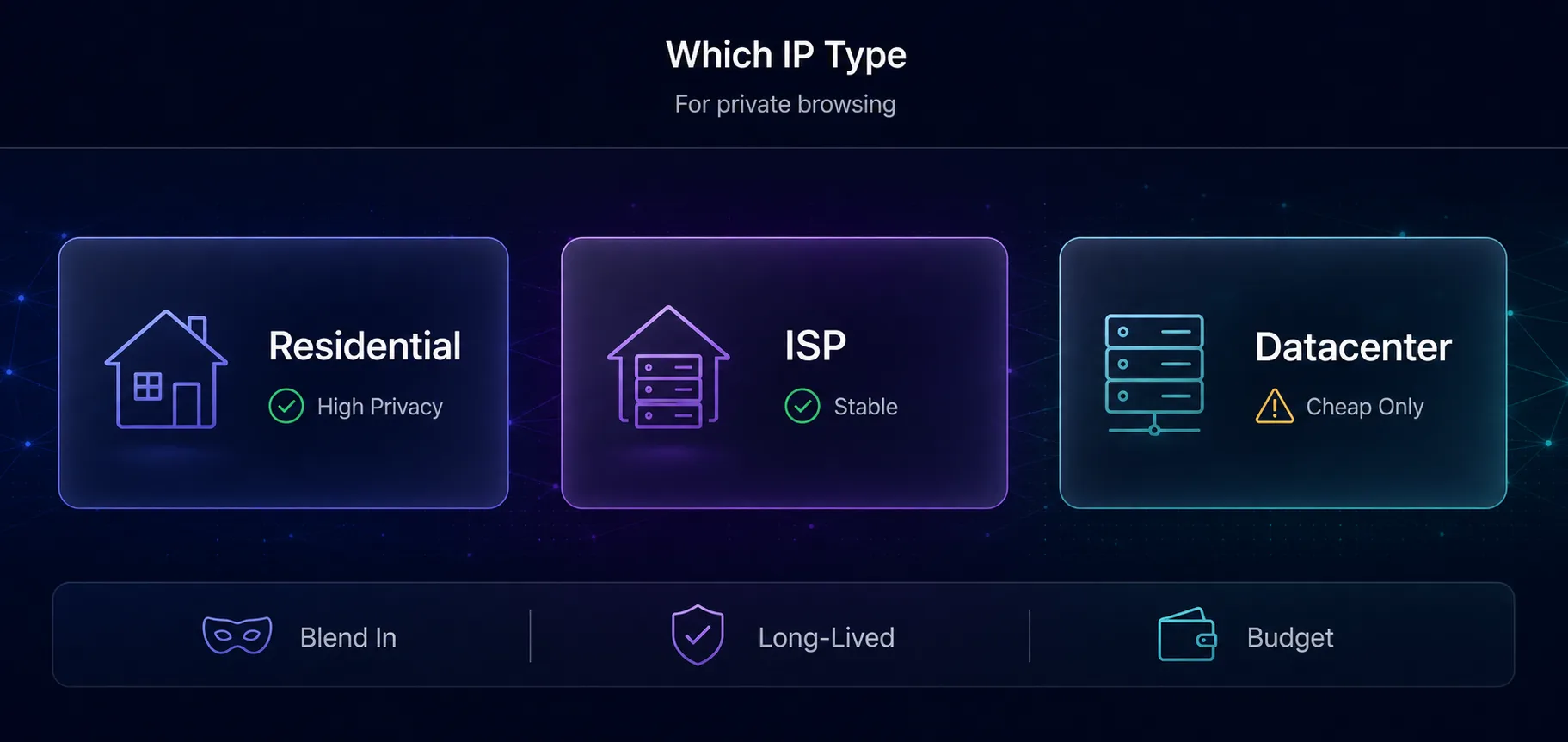
The proxy type shapes how private and reliable you actually are.
| Proxy Type | Privacy | Cost | Best For |
|---|---|---|---|
| Residential | High | $$ | Blending in as a real user |
| ISP (static) | High | $$$ | Stable, long-lived privacy |
| Datacenter | Low-Medium | $ | Cheap, lenient targets only |
Our take: for genuine privacy, residential proxies blend in as real users, while datacenter proxies are cheaper but easier to spot. For the full landscape, see our guide to the types of proxies.
Privacy Proxy Pricing Compared
Residential is usually billed per gigabyte; a few offer flat or non-expiring models that suit privacy budgets. Approximate positioning (always verify current pricing):
| Provider | Model | SOCKS5 | Best Fit |
|---|---|---|---|
| IPRoyal | Non-expiring per GB | Yes | Value, occasional use |
| Decodo | Per GB, plans | Yes | All-round reliability |
| Webshare | Free + cheap paid | Yes | Cheapest entry |
| SOAX | Per GB, flexible | Yes | Cleanest pool |
| PyProxy | Per GB + unlimited day | Yes | Big pool, budget |
| Geonode | Unlimited bandwidth option | Yes | Heavy, flat pricing |
| NodeMaven | Per GB, sticky | Yes | Clean, stable sessions |
Check before you buy: the cheapest per-GB rate is a false economy if the IPs are flagged. Weigh sourcing and pool quality, not price alone.
How to Choose a Cheap Privacy Proxy
1How Private Do You Need to Be?
Escaping ISP tracking and advertisers is a modest bar most clean residential proxies clear. If your threat model is higher, prioritize ethical sourcing and a no-logs stance over saving a dollar.
2How Much Traffic Will You Use?
Light use suits non-expiring or free tiers; heavy use favors an unlimited-bandwidth plan so a metered bill does not spiral. Estimate your gigabytes honestly first.
3Residential or Datacenter?
Residential for real privacy that blends in, datacenter only for cheap, lenient tasks where being spotted does not matter. Many people mix both.
4Free or Paid?
Reputable free tiers like Webshare's are fine for testing. Avoid anonymous free proxy lists entirely, since they are the ones most likely to log and sell your traffic.
Common Privacy Proxy Mistakes
1Trusting Anonymous Free Proxies
Running proxy servers costs money, so a truly anonymous free list often monetizes your data by logging or injecting into it. That is the opposite of privacy. Stick to reputable free tiers or cheap paid plans.
2Buying on Price Alone
The cheapest per-GB pool is often recycled and pre-flagged, so you waste bandwidth on failures. Judge by successful, clean requests, not the sticker rate.
3Ignoring the Provider's Sourcing
Cheap IPs of unknown origin can undermine the privacy you are paying for. Favor providers transparent about consent-based sourcing.
4Forgetting the Rest of Your Fingerprint
A proxy hides your IP, but browser fingerprinting and logins still identify you, as our guide on what websites can see explains. Pair the proxy with good browser habits.
Frequently Asked Questions
The Bottom Line
Reliable and cheap privacy proxies do exist, you just have to skip the extremes. IPRoyal is the best value, Decodo the most reliable all-rounder, and Webshare the cheapest way in. SOAX and NodeMaven bring the cleanest pools, while PyProxy and Geonode give you scale and flat pricing on a budget.
Whichever you pick, remember that privacy is about trust: choose a provider transparent about ethical sourcing, judge cost by clean successful requests rather than the sticker price, and pair the proxy with sensible browser habits. Get that right and you get real privacy without overpaying.
Ready to choose? Compare live specs in our proxy directory, line two up with our comparison tool, or see the budget angle in our cheapest private proxies guide.


![Best Apify Actors for Scraping Social Media in [year]](/_next/image?url=https%3A%2F%2Fproxyhorizon.com%2Fcdn%2Fblog-images%2Fbest-apify-actors-social-media-1-mtsb9eli.webp&w=3840&q=75)