Best Proxies for Backlinks Monitoring (2026)
The best proxies for backlinks monitoring in 2026. Compare 7 top providers, plus a tiered datacenter-first strategy that cuts crawl costs without losing accuracy.
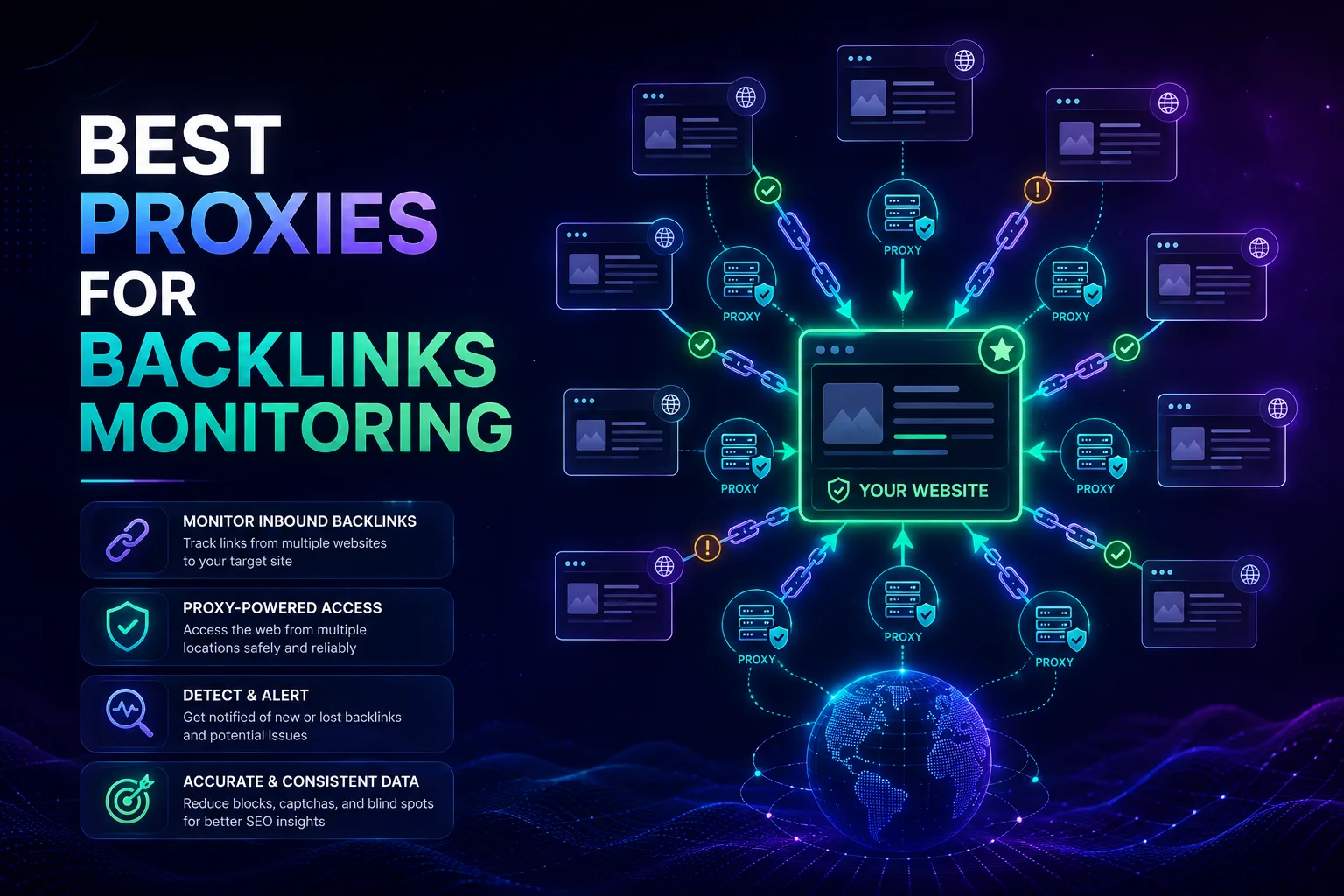
Backlinks are among the strongest ranking signals in SEO, but they are also frustratingly fragile. Links get removed during redesigns, quietly switched to nofollow, buried on a paginated page, or lost when a publisher prunes old content. If you paid for a placement or earned it through outreach, you need to know the moment it disappears.
That means crawling thousands of third-party pages on a schedule, and the moment you do, you run into rate limits, WAFs, and IP blocks. A backlink monitor running from a single office IP gets throttled within an hour and starts reporting links as dead when they are simply unreachable, which is worse than no data at all.
This guide ranks the best proxies for backlinks monitoring in 2026, and explains something most SEO guides get wrong: backlink crawling is not the same problem as scraping Google, and the cheapest correct answer looks very different. Let us dig in.
- Backlink monitoring crawls thousands of ordinary third-party sites, not one hard target, so it is a very different job from scraping Google.
- Most of those sites have light defences, which means cheap datacenter proxies can handle the bulk of the crawl.
- Use a tiered strategy: datacenter proxies first, then retry the small share of blocked domains on residential IPs.
- Top picks: Oxylabs for all proxy types under one roof, Decodo for value, and Webshare for very cheap high-volume crawling.
Best Proxies for Backlinks Monitoring: Quick Comparison
Here is an at-a-glance look at our seven picks before we break each one down.
| Provider | Best For | Key Strength | Proxy Types |
|---|---|---|---|
| Oxylabs | Best overall | Every proxy type under one roof | Residential, ISP, Datacenter |
| Decodo | Best value | Large pool, easy dashboard | Residential, Mobile, ISP, DC |
| Webshare | Budget bulk crawling | Very cheap datacenter proxies | Datacenter, Residential |
| BrightData | Enterprise scale | Huge network, mature tooling | Residential, Mobile, ISP, DC |
| IPRoyal | Flexible pay-as-you-go | Traffic that never expires | Residential, Mobile, DC |
| Geonode | High-volume crawling | Unlimited-bandwidth plans | Residential, Mobile, DC |
| SOAX | Hard-to-crawl targets | Clean, filtered residential pool | Residential, Mobile |
Why Backlink Monitoring Needs Proxies
A backlink monitor is a crawler, and crawlers get blocked. When you check a few thousand referring pages every day, several things go wrong from a single IP.
You hit rate limits, because repeatedly requesting pages from the same address looks like automated traffic to any server. You trip WAFs and bot protection on the subset of sites running Cloudflare or similar. And you risk getting your office or server IP blacklisted, which can affect normal browsing for your whole team.
The most damaging outcome is subtler: false negatives. When a crawl is blocked, a naive monitor records the link as lost. You then chase a publisher about a link that was never removed, or worse, you miss genuinely lost links in the noise. Proxies keep your success rate high enough that the data is trustworthy. Our guide on why web scraping needs proxies covers the fundamentals.
What Backlink Monitoring Actually Checks
Verifying a backlink is more than confirming a page loads. A proper monitor checks several attributes on every referring page.

Is the link still live? The core check: does the target URL still appear in the page HTML. Anchor text matters because publishers sometimes rewrite it, changing the relevance signal you earned. The rel attribute is critical, since a link silently switched to nofollow, sponsored, or ugc passes very different value.
Placement tells you whether the link sits in the main body or got demoted to a footer or sidebar. And the HTTP status of the referring page reveals whether it now 404s, redirects, or was noindexed, all of which change what the link is worth. Tracking these together is what turns a link list into an early-warning system.
Why Backlink Crawling Is Different From SERP Scraping
This is the insight that saves most teams a lot of money, and it is where generic SEO proxy advice goes wrong.
When you scrape Google Search or Maps, you are attacking one extremely well-defended target that actively hunts automation. Residential proxies are mandatory there, as we cover in our guides to the best proxies for scraping Google Search and the best proxies for Google Maps scraping.
Backlink monitoring is the opposite shape of problem. You are hitting thousands of different ordinary websites, each just once or twice per cycle. Most are blogs, news sites, directories, and small business pages with little or no bot protection. From any individual site’s perspective, your crawler is a single visitor, not a flood. That means expensive residential bandwidth is overkill for the majority of the crawl, and cheap datacenter IPs handle it perfectly well.
The catch is the minority. A meaningful slice of referring domains sit behind Cloudflare or similar protection and will reject datacenter traffic outright. Those are the ones that need residential IPs, which leads directly to the strategy below.
The Smart Tiered Proxy Strategy
Rather than picking one proxy type, the cost-effective approach is to use two in sequence.
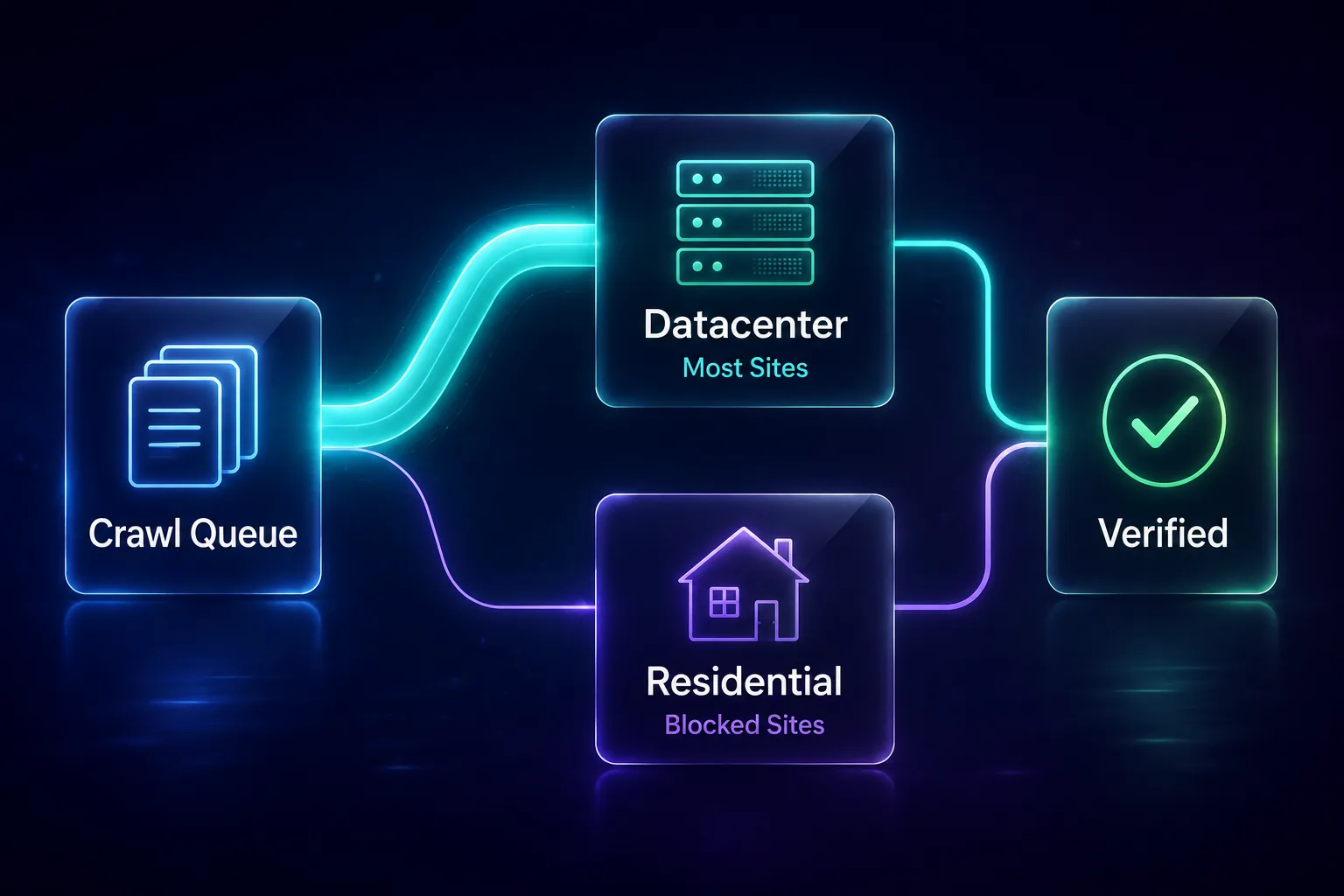
Tier one: datacenter proxies for the bulk. Route your entire crawl queue through cheap, fast datacenter IPs first. For the large majority of referring pages this succeeds immediately, at a tiny fraction of residential cost. See our roundup of the best datacenter proxy providers.
Tier two: residential retry for the blocked remainder. Whenever a request returns a 403, a challenge page, or a suspicious empty body, queue that domain for a retry through residential proxies. Because only a small share of domains need this, your residential bandwidth spend stays low.
Optional tier: ISP proxies for repeat offenders. For domains you check constantly that dislike datacenter IPs but do not need full residential rotation, ISP proxies offer residential trust with static, fast connections.
Teams that adopt this pattern typically cut proxy costs dramatically compared with running everything on residential, while keeping success rates high. If a lot of your referring domains are protected, our guide to the best proxies for Cloudflare-protected sites goes deeper.
The 7 Best Proxies for Backlinks Monitoring in 2026
These providers all support the crawl volumes and proxy-type mix that backlink monitoring demands.
1Oxylabs, Best Overall

Oxylabs takes the top spot precisely because it offers every proxy type you need under one account: cheap datacenter for the bulk crawl, ISP proxies for stable repeat checks, and one of the cleanest residential pools for the blocked remainder. Running a tiered strategy through a single provider and dashboard is a genuine operational advantage.
Add enterprise-grade reliability, high success rates, and 24/7 support, and it is the most complete option for teams monitoring links at serious scale. See our Oxylabs pricing breakdown for the cost picture.
2Decodo, Best Value

Decodo (formerly Smartproxy) delivers the same multi-type flexibility at a noticeably friendlier price, with datacenter, ISP, and a large residential pool available together plus one of the easiest dashboards in the industry. Its high success rates hold up well across the messy variety of sites a backlink crawler encounters.
For agencies and in-house SEO teams who want the tiered approach without enterprise pricing, Decodo is the sweet spot. Compare the numbers in our Decodo pricing guide.
3Webshare, Best Budget for Bulk Crawling

Webshare deserves a higher ranking here than it would get in a Google-scraping guide, because backlink monitoring is exactly the workload its very cheap datacenter proxies are built for. When most of your crawl targets are ordinary sites with no serious bot protection, paying residential rates is simply wasted money.
With a free tier to test and some of the lowest per-proxy prices anywhere, Webshare is the most cost-efficient way to power tier one of a tiered crawl, and its residential option can cover lighter fallback needs.
4BrightData, Best for Enterprise Scale

BrightData is the choice when you are monitoring hundreds of thousands of links across many markets. Its network depth, full proxy-type coverage, and mature tooling handle crawls that would strain smaller providers, with the reliability large agencies and enterprises need.
It sits at the premium end of pricing, but for link portfolios where accuracy and uptime are business-critical, that infrastructure earns its cost.
5IPRoyal, Best Flexible Pay-As-You-Go

IPRoyal suits teams whose crawls run in bursts rather than continuously. Its residential traffic never expires, so you can buy a block and draw it down across weekly or monthly link audits without losing what you paid for, and its datacenter proxies are cheap enough for the bulk tier.
For consultants and smaller agencies running periodic backlink audits rather than constant monitoring, that flexibility is genuinely valuable.
6Geonode, Best for High-Volume Crawling

Geonode’s unlimited-bandwidth residential plans change the maths when your fallback tier is large. Crawling full HTML pages consumes far more bandwidth than API calls, so if a big share of your referring domains need residential retries, a flat rate can beat per-gigabyte pricing comfortably.
For large, continuous link-monitoring operations, it removes the anxiety of a metered bill growing with your link portfolio.
7SOAX, Best for Hard-to-Crawl Targets

SOAX rounds out the list as the specialist for your most stubborn referring domains. Its rigorously filtered residential and mobile pool delivers high success rates against sites with aggressive protection, which is precisely what tier two of a tiered crawl is for.
You would not run an entire backlink crawl through SOAX, but as the fallback that rescues the domains everything else fails on, it is excellent. Browse all options in our proxy directory.
How to Choose the Right Proxy for Backlink Monitoring
Match the provider to the shape of your link portfolio and crawl schedule.
1Proxy Type Mix
Prioritise providers that offer datacenter and residential under one account, so you can run tiers without juggling vendors. Oxylabs, Decodo, and BrightData all qualify.
2Crawl Volume and Bandwidth
Full page HTML is heavy. If you check tens of thousands of links frequently, weigh unlimited-bandwidth plans like Geonode’s against per-gigabyte billing.
3Concurrency Limits
Monitoring is throughput-bound, so check the concurrent connection limits on your plan. Higher concurrency means faster full-portfolio sweeps.
4Success Rate on Protected Sites
Your fallback tier only matters if it works. Clean, filtered pools from SOAX or Oxylabs recover the domains cheaper pools cannot. Learn what you are up against in how websites detect proxy traffic.
5Rotation Control
You want per-request rotation for breadth-first crawling across many domains. See our guide to rotating proxies.
Best Practices for Backlink Crawling
Good proxies keep you unblocked; good manners keep you unblocked long term.
Crawl politely. You are visiting other people’s sites. Keep concurrency per domain low, add delays, and never hammer a single publisher. One or two requests per referring page per cycle is all you need.
Respect robots.txt and identify yourself. Use a descriptive user agent where appropriate. Being a well-behaved crawler dramatically reduces the chance of being blocked in the first place.
Spread checks across the schedule. Do not verify your entire portfolio in one burst. Stagger checks across hours or days to smooth your request rate and reduce load everywhere.
Distinguish blocks from real removals. This is the big one. Treat a 403, a challenge page, or a timeout as inconclusive, not as a lost link. Retry through a different tier before flagging anything. Our guide on handling proxy timeouts and errors covers the retry patterns.
Render JavaScript only when needed. Most links sit in static HTML. Reserve headless browsers for sites that inject content dynamically, since rendering is far slower and heavier.
Common Mistakes to Avoid
These errors quietly corrupt backlink data.
1Running Everything on Residential
It works, but you will pay many times more than necessary. Most referring sites do not need residential IPs. Tier your crawl and spend residential bandwidth only where it is required.
2Treating Blocks as Lost Links
The single most damaging mistake. A blocked crawl is missing data, not a removed link. Without a retry tier and a separate inconclusive status, your reports will be wrong and you will waste outreach chasing phantom losses.
3Checking Too Aggressively
Hitting every referring page every hour creates load, invites blocks, and tells you nothing new. Most link portfolios only need daily or weekly verification.
4Ignoring the Rel Attribute
A link that is still present but quietly changed to nofollow or sponsored has lost most of its value. If you only check for URL presence, you will never notice.
5Using One Free Proxy List
Free proxy lists are slow, unreliable, and often already blocked, which produces exactly the false negatives you are trying to avoid. Paid proxies pay for themselves in data accuracy alone.
Frequently Asked Questions
The Bottom Line
Backlink monitoring is a crawling problem, not a Google problem, and recognising that changes your proxy strategy entirely. Because you are visiting thousands of ordinary sites rather than one fortress, cheap datacenter proxies can carry the bulk of the work, with residential IPs reserved for the blocked minority. Teams that tier their crawl this way get accurate data at a fraction of the cost.
For most people, Oxylabs is the best overall pick because it offers every proxy type under one account, making a tiered strategy simple. Choose Decodo for the best value, Webshare for the cheapest bulk crawling, BrightData for enterprise scale, and SOAX when you need to crack the hardest domains. Compare them all in our proxy directory, or read our related guide on how proxies help with SEO monitoring and the best SEO proxies for SERP scraping.
Keep Reading
More articles you might enjoy